Silicone Neon Flex for Architectural Outline and Signage Lighting
Custom silicone neon flex in 6×12, 8×16 and 10×20 mm profiles. IP67, 12 V or 24 V, 5–12 W/m, top or side bend, 2700–6500 K and RGB, 5 m reels.
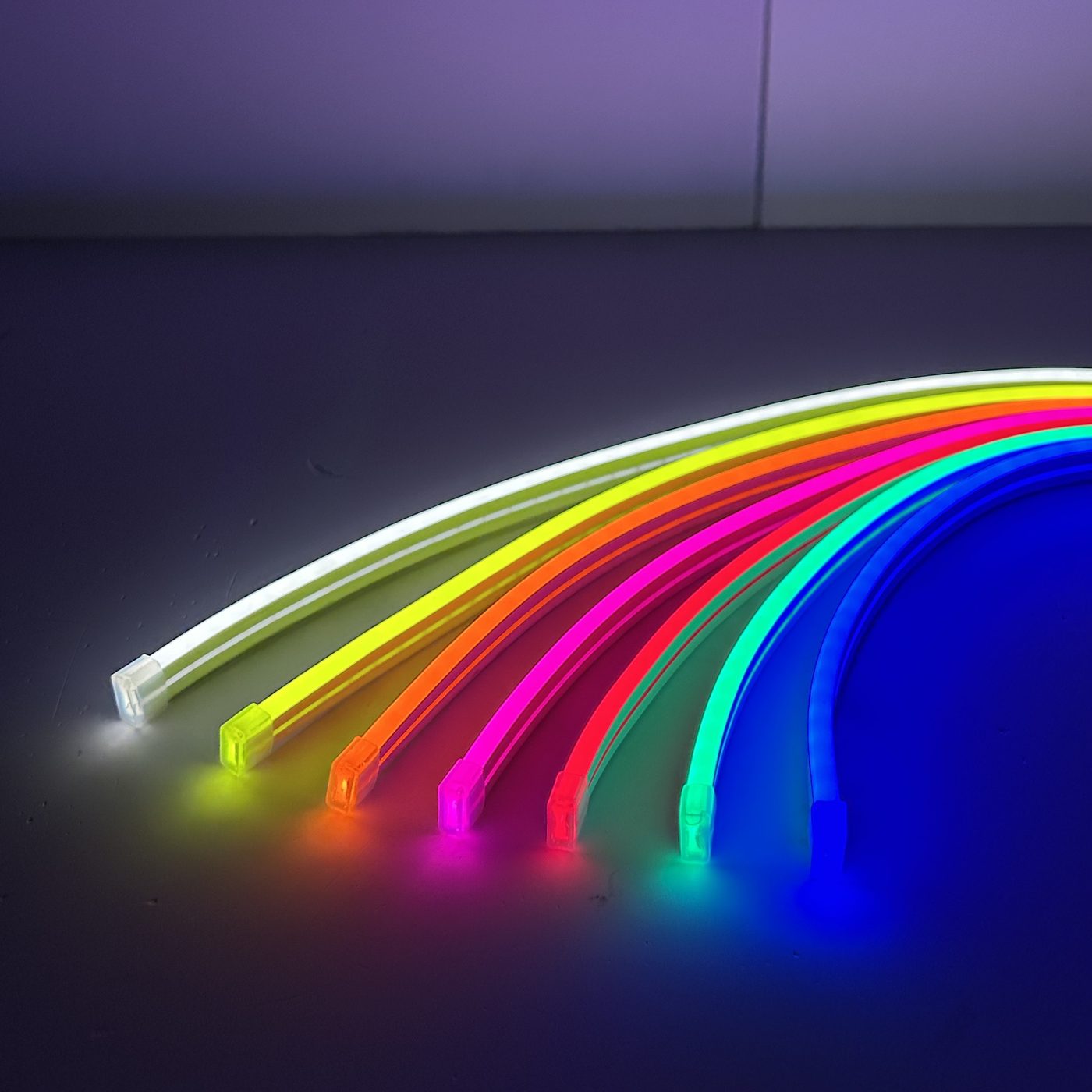
Silicone neon flex is a flexible linear light in a solid silicone profile that diffuses the LED source into an even, continuous line while sealing the electronics to IP67. HFY LED extrudes neon flex in 6×12 mm, 8×16 mm and 10×20 mm profiles on 12 V or 24 V, at 5–12 W/m, in top-bend and side-bend versions, from 2700 K to 6500 K plus RGB and RGBW.
Scope: what this product page covers
This page covers silicone neon flex for architectural outlines, signage and interior feature lighting. Glass neon replacement in heritage applications is quoted case by case; neon flex with a bend radius below 30 mm requires a different profile and is not standard catalogue stock. Channel-letter grade neon with a narrow 6 mm face is available on request.
Specifications
| Profile sizes | 6×12 mm, 8×16 mm, 10×20 mm |
|---|---|
| Bending direction | Top bend and side bend |
| Minimum bend radius | 30 mm (8×16 mm top bend) |
| Input voltage | 12 V DC or 24 V DC |
| Power | 5 – 12 W/m |
| Colour options | 2200–6500 K, red, green, blue, amber, RGB, RGBW |
| Ingress protection | IP67 standard, IP68 on request |
| Reel length | 5 m standard, 10 m at 24 V |
| Lead time | 12–18 working days |
Materials
- Platinum-cured silicone profile, UV stabilised
- SMD 2835 or 5050 LEDs on a 2 oz FPC insert
- Silicone end caps and cable glands, potted
- Aluminium mounting channel and clips for facade work
- 24 V constant-voltage drivers, dimmable and non-dimmable
Manufacturing process
- Profile and LED matching The LED pitch inside the profile is set by the diffusion distance: an 8×16 mm profile needs 120 LEDs/m to read as continuous, while a 10×20 mm profile reads continuous at 60 LEDs/m because the silicone wall is thicker. Under-driving an LED inside a large profile is the usual cause of visible dots in neon flex.
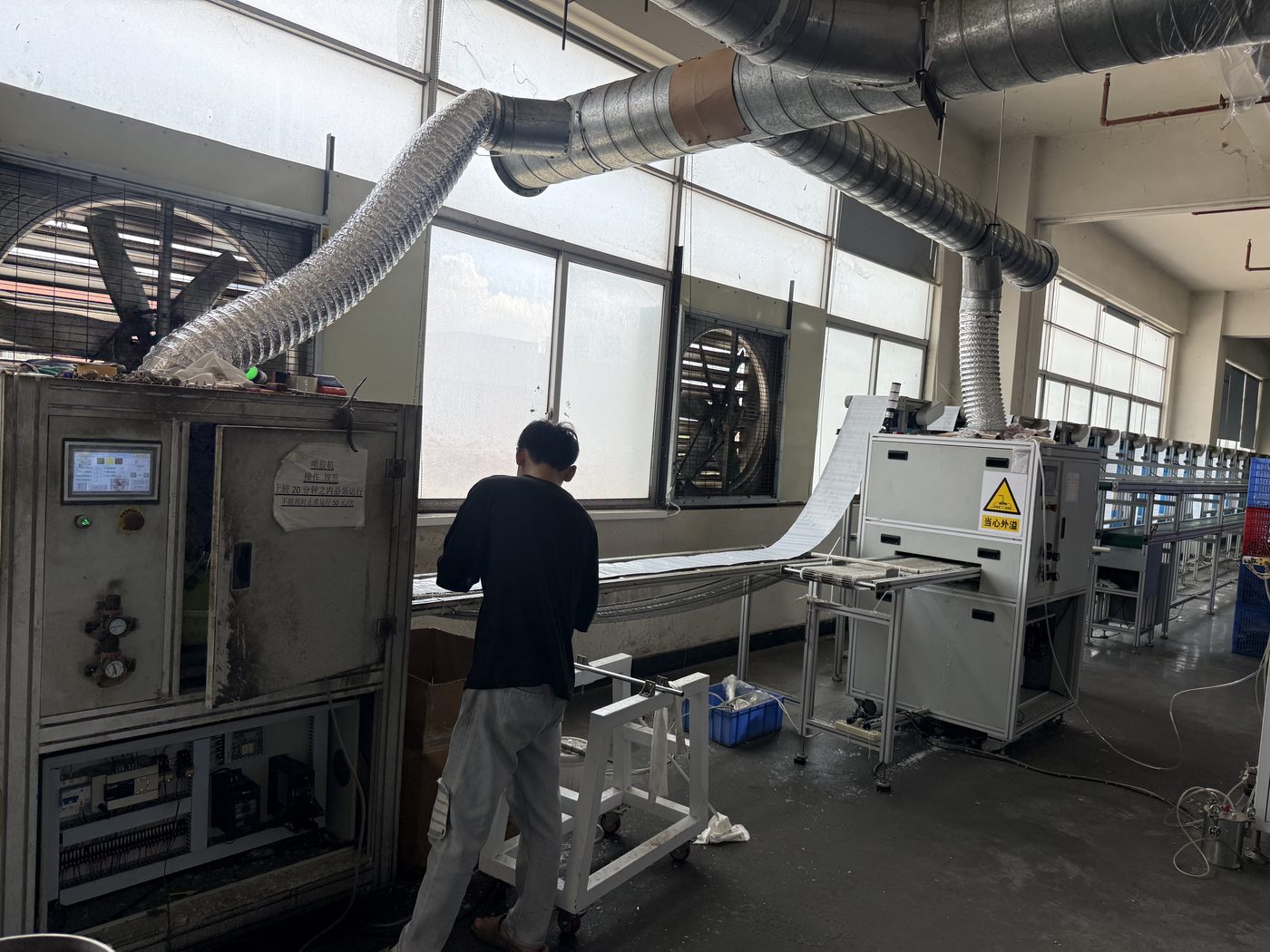
- Extrusion Platinum-cured silicone is extruded around the FPC insert and cured in a continuous line, with profile tolerance held to ±0.2 mm. Platinum cure is used rather than peroxide cure because it does not yellow under UV, which matters for facade work with a 5-year warranty.
- End sealing End caps are bonded with neutral silicone and the cable entry is potted, then the assembly is pressure-tested at 0.3 bar for 60 seconds. A neon flex that fails IP67 fails at the end cap, not through the profile wall.
- Bend forming For projects with a defined geometry, strip is pre-bent on a jig to the drawing radius and heat-set. Site bending below the rated radius cracks the phosphor layer and produces a dark spot that appears 2–3 months later, after the installation is closed.
- Test and pack Each reel runs 12 hours at rated current and is checked end to end for colour shift and dark segments. Reels ship coiled on a 400 mm former with the bend direction marked.
Silicone Neon Flex in production
Typical applications
- Hotel and retail facade outlines
- Signage and channel letter faces
- Restaurant and bar feature lighting
- Swimming pool and spa surrounds (IP68 version)
- Stair nosing and handrail lighting
- Landscape and garden path delineation
Quality and documentation
- IP67 pressure test on 100% of assemblies
- UV ageing test to ISO 4892-3, 500 hours, no yellowing above ΔE 3
- Colour consistency SDCM ≤ 3 across a project batch
- Bend radius verification on pre-formed sections
- CE and RoHS documentation
What we do not do
Silicone neon flex is not a structural element: it must sit in an aluminium channel or clip for facade runs above 3 m, because the profile sags under its own weight at high ambient temperature. We do not supply neon flex for direct burial or permanent underwater installation deeper than 1 m — the IP68 build resists splash and shallow immersion, and chlorinated pool chemistry degrades the silicone over 2–3 years regardless of rating.
Technical questions
Is silicone neon flex better than PVC neon?
For exterior and UV-exposed work, yes. Silicone stays flexible from −40 °C to 200 °C and does not yellow, while PVC becomes brittle below −10 °C and yellows within 12–18 months in direct sun. Silicone costs 30–40% more per metre, so PVC remains reasonable for indoor temporary installations.
Can neon flex follow a tight corner?
The minimum bend radius is roughly three times the profile width on top-bend versions: 30 mm for 8×16 mm and 45 mm for 10×20 mm. Tighter corners need a pre-formed section or a side-bend profile, and bending below the radius cracks the phosphor even when the light still appears to work.
How is neon flex mounted on a facade?
In a slotted aluminium channel fixed at 500 mm centres, with the flex pushed in rather than glued. Adhesive alone fails within one summer on a south-facing wall because the differential expansion between silicone and aluminium is about 3 mm per metre at 60 °C surface temperature.
Adjacent products and capabilities
COB LED Strip
A COB LED strip is a flexible linear light source in which bare LED dies are bonded directly onto the FPC and sealed under one continuous phosphor layer, so the light is dot-free instead of showing individual emitters. HFY LED builds COB strips at 320, 480 and 504 chips per metre on 24 V, delivering 8–15 W/m at CRI 90–95 with SDCM ≤ 3 colour consistency, in reels from 5 m to 50 m and sealing from IP20 to IP68..
View productSMD LED Strip
An SMD LED strip carries packaged surface-mount LEDs on a flexible PCB at a fixed pitch, which makes it the lowest cost per lumen option for volume lighting. HFY LED produces 2835, 5050 and 5630 strips from 60 to 240 LEDs per metre on 12 V or 24 V, at 100–190 lm/W and CRI 80–90, with reels from 5 m and typical production lead times of 15–20 working days..
View productRGB & Pixel LED Strip
An addressable pixel strip contains an IC at every LED or every three LEDs, so each pixel can be set to an individual colour and brightness from a controller. HFY LED supplies RGB, RGBW and addressable strips on WS2812B, WS2811 and SPI 12 V and 24 V platforms, from 60 to 144 pixels per metre, with custom pixel mapping, lead frames and IP67 sealing for outdoor media facades..
View productQuality & Testing
100% reel electrical test, 24-hour burn-in and SDCM ≤ 3 binning on every order.
Testing capabilitySend a specification, get a quotation in 24 hours
Tell us the product type, run length, wattage, CCT, CRI and IP rating. You will receive a fixed price, a lead time, and the feed and driver arrangement in writing — no obligation, and no sales call unless you ask for one.