Lightbox Modules: 22% Fewer Modules at Higher Uniformity
How a UK sign fabricator cut lightbox module count 22% while lifting face uniformity from 71% to 89%, by pitching modules to box depth.
A UK sign fabricator was specifying 24 modules per square metre on every lightbox regardless of depth, which made shallow boxes hot and deep boxes patchy. HFY LED re-pitched modules to the measured box depth and acrylic grade, cutting module count by 22% while raising edge-to-centre uniformity from 71% to 89% on a 1,200 mm box.
The starting condition
The fabricator builds 260 signs a year, mostly 1,200 × 800 mm and 2,400 × 1,200 mm fascia boxes, in depths from 80 mm to 220 mm. The standard grid of 24 modules per square metre was inherited from a direct-view product years earlier. On shallow boxes it produced hotspots and heat build-up; on deep boxes the edges fell to 71% of centre brightness, which customers noticed on light-coloured graphics. Complaints were running at 6 per 100 signs.
Constraints
| Annual volume | 260 signs, 4 standard sizes |
|---|---|
| Box depths | 80 mm to 220 mm |
| Acrylic | 3 mm and 5 mm opal, plus 3 mm clear with diffuser |
| Uniformity target | ≥ 85% edge-to-centre |
| Driver headroom | 80% maximum |
| Cost target | No increase in BOM cost per sign |
Measured results
- Modules per square metre
- Face uniformity
- Complaints per 100 signs
- BOM cost per sign
What we changed, and why
- Measure the optical system, not the LED Light distribution in a lightbox is set by the ratio of module pitch to box depth. We built a test box with adjustable depth and measured face luminance at 11 points for pitches from 80 mm to 200 mm, giving a pitch table that the fabricator could apply directly rather than guessing from a datasheet.
- Pitch by depth and diffuser grade A 100 mm box with 3 mm opal acrylic needs 110 mm pitch; the same box with 5 mm acrylic tolerates 150 mm pitch, and a 220 mm box with a diffuser tolerates 200 mm. Applying the table cut module count from 24 to 18.7 per square metre on the two most common sizes.
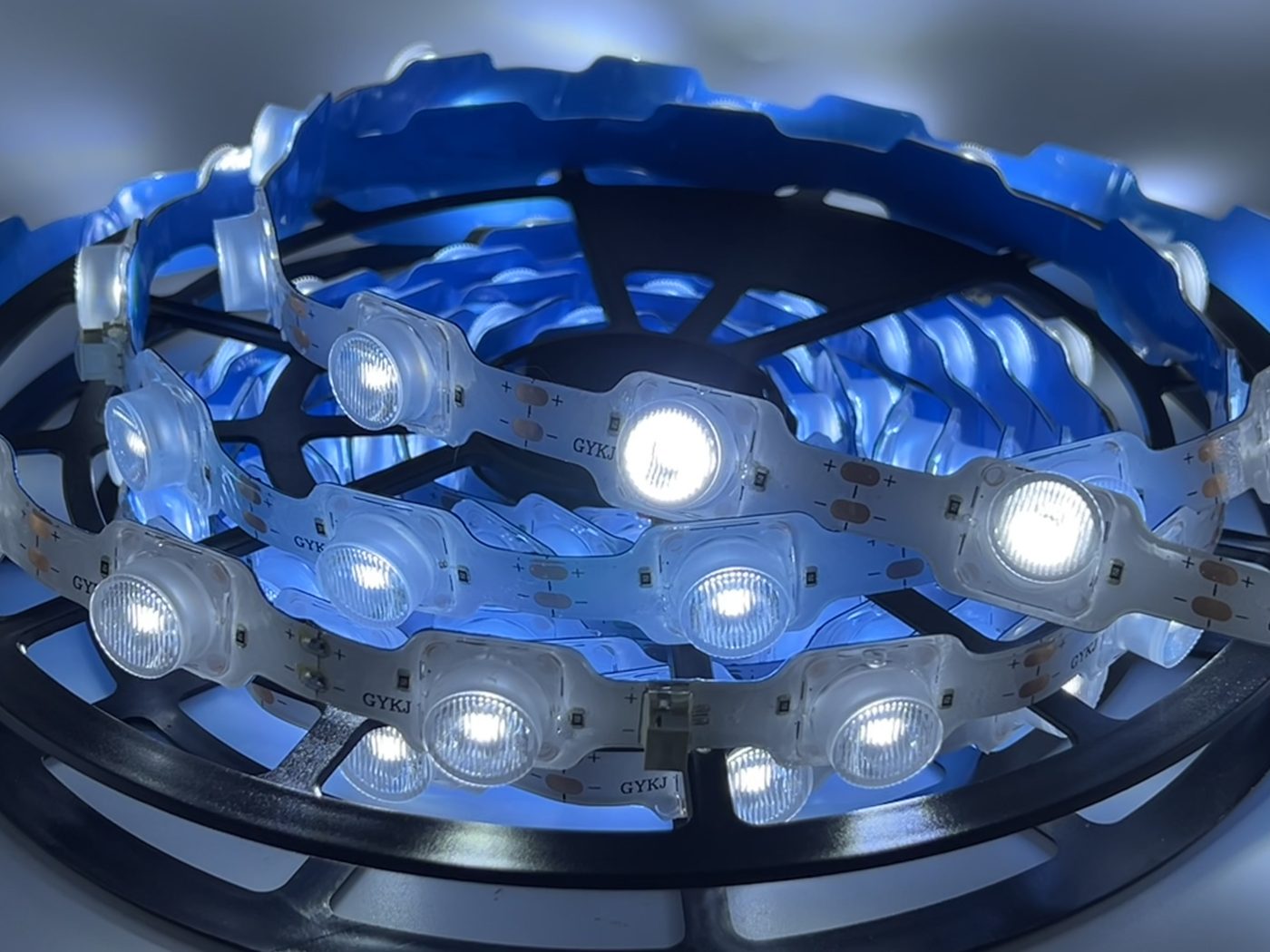
- Zigzag routing to remove connectors Modules were linked on a zigzag FPC instead of discrete leads, so a panel needs one feed rather than four. Connector failures had accounted for about a third of the warranty claims, and removing three connectors per panel removed the failure mode as well as the labour.
- Pack per panel with the layout drawing Modules are now packed per panel with the tested layout drawing and numbered leads. Mixed packing was the reason a correctly designed box could still measure unevenly: installers were following a generic pattern rather than the tested one.
“We had been solving a lighting problem by adding modules. The test box showed us the pitch was the problem, and the fix was cheaper than what we were doing.”
Production manager, Sign fabricator, United Kingdom — Sign fabricator, 260 signs per year
Where this approach stops working
The pitch table applies to boxes up to 300 mm deep with standard opal or diffused acrylic. Boxes using clear acrylic without a diffuser, tensioned fabric faces or edge-lit designs need a different optical approach, and we would rather decline the layout than ship modules and let the fabricator discover the hotspot on site.
Parts and process
Products used in this programme
SMD LED Strip
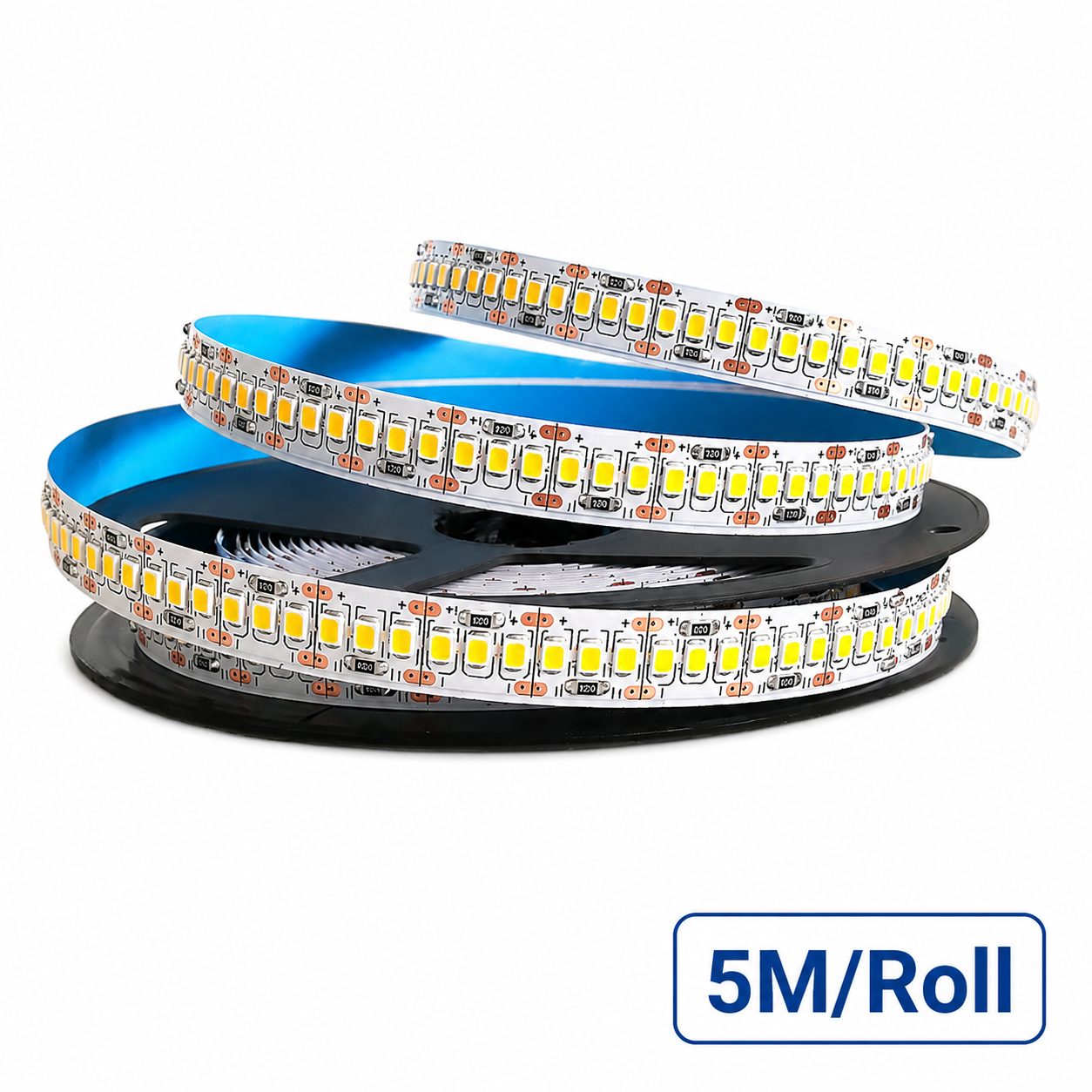
An SMD LED strip carries packaged surface-mount LEDs on a flexible PCB at a fixed pitch, which makes it the lowest cost per lumen option for volume lighting. HFY LED produces 2835, 5050 and 5630 strips from 60 to 240 LEDs per metre on 12 V or 24 V, at 100–190 lm/W and CRI 80–90, with reels from 5 m and typical production lead times of 15–20 working days..
View productLightbox & Side-Emitting Strip
A lightbox LED strip is a side-emitting or zigzag-arranged strip that throws light sideways into the acrylic face of a sign, producing even brightness without the hot spots of a direct-view strip. HFY LED supplies side-view 3014 and 335 strips and zigzag backlight strips at 0.6–1.5 W per module on 12 V or 24 V, sized to box depths from 60 mm to 300 mm, with IP65 sealing for outdoor signs..
View product1,100 m of Facade Neon Flex Without a Single Visible Colour Step
Read case studyRetail Shelving Rollout: CRI 95 Strip Across 180 Stores in 11 Months
Read case studySend a specification, get a quotation in 24 hours
Tell us the product type, run length, wattage, CCT, CRI and IP rating. You will receive a fixed price, a lead time, and the feed and driver arrangement in writing — no obligation, and no sales call unless you ask for one.